
Fairfax County Wanted Fugitives Status
Fairfax County publishes no standing most-wanted page. The Sheriff's Office and Fairfax County Police Department offer no name-search portal, no photo roster, and no published count of people being sought. That gap leaves room for confusion. An old social media post or a commercial listing can look official while proving nothing about a live warrant. The Sheriff's materials explain county procedure, and FCPD News occasionally features a specific appeal when investigators need help finding someone.
Those event-driven notices may carry a photo or a description. Treat them as isolated releases, not a database. When someone has already been arrested, the county's official record and custody routes show whether the person is in jail and how the case is tracking through the courts.
| Public-list feature | Fairfax County finding | What to use instead |
|---|---|---|
| Countywide name search | No official public warrant-name portal was located. | Use the Sheriff Warrant Desk for confirmation. |
| Standing wanted profiles | No standing Sheriff or FCPD photo roster was located. | Read only an applicable official FCPD appeal. |
| Count or posting cadence | No count, schedule, or public list maintenance promise was found. | Do not infer current status from an older post. |
| Custody result | A wanted notice is not a jail roster or a case outcome. | Use the court record after an arrest or booking. |
Without a wanted list, the web can't promise completeness. A dated FCPD release may sit online long after its purpose passed, and a court docket may reflect a stage the case has moved beyond. So no internet search can guarantee that every active warrant or fugitive matter is visible. Two official routes carry real weight: the Sheriff's Warrant Desk and the courts. Start there, not with a broad search engine.
Checking Fairfax County Warrants
To confirm a warrant, call the Fairfax County Sheriff's Warrant Desk at 703-246-4231. The Sheriff's FAQ directs warrant questions there. Not every warrant gets disclosed by phone, though. FCPD policy lets officers withhold details for investigative or public-safety reasons. Whatever the desk tells you is the current official answer, and that beats any online listing.
Virginia's court tools serve a different purpose. The Virginia Courts case-information services can surface public docket entries tied to a case or capias. They can't validate an active warrant. A missing entry doesn't mean no warrant exists. Entries can also lag behind real events. Anyone who suspects a warrant involves them should talk to a lawyer or the court and resolve it properly.
Fairfax General District Court and Circuit Court follow separate procedures, so check which court a result points to. A docket may list a hearing, a charge, or a case number. It may say nothing about whether a warrant remains active. Asking the responsible court about its process, and getting legal advice, are the practical moves. Neither route is a way to dodge service or act outside normal procedure.
- Call the Sheriff Warrant Desk at 703-246-4231 for a Fairfax County confirmation inquiry.
- Use the Virginia Courts case-information service only to review public docket context connected to a case.
- Contact the appropriate court clerk when court procedure or a court-issued matter needs clarification.
- If the question concerns the caller, consult an attorney or the court about lawful resolution rather than relying on unofficial results.
- Do not treat a tip channel, a news story, or an old online post as warrant verification.
Fairfax County Warrant Types
Fairfax's published procedures use precise labels rather than one catch-all list. Civil capias and bench warrants from civil actions fall under the Sheriff's arrest procedure. Warrants received for service get forwarded to the Police Department Warrant Desk. That desk enters them into internal wanted-person and warrant-control systems. The systems stay inside law enforcement. The public cannot search them.
The table below separates what's publicly known from what needs official confirmation. It names no one and describes no specific case. The terminology can get technical. A capias is a court process that can compel someone's appearance, while a bench warrant is simply a warrant a court issues. The responsible office confirms the exact document and its status.
| Category or record | What Fairfax research supports | Appropriate check |
|---|---|---|
| Civil capias or bench warrant | The Sheriff’s procedures describe internal handling of these court-related matters. | Ask the court or counsel, then use the Warrant Desk for current warrant confirmation. |
| Warrant received for service | The Sheriff forwards it to the Police Department Warrant Desk for internal entry. | Do not attempt to access NCIC, VCIN, or the internal control system. |
| Public case or capias docket entry | Court systems can supply public case context. | Use the Virginia Courts service, then confirm active status through official channels. |
| State or national wanted profile | It may concern a different custody system or jurisdiction. | Use its sponsoring agency only for that profile, never as a Fairfax check. |
Fairfax County Tips and Safety
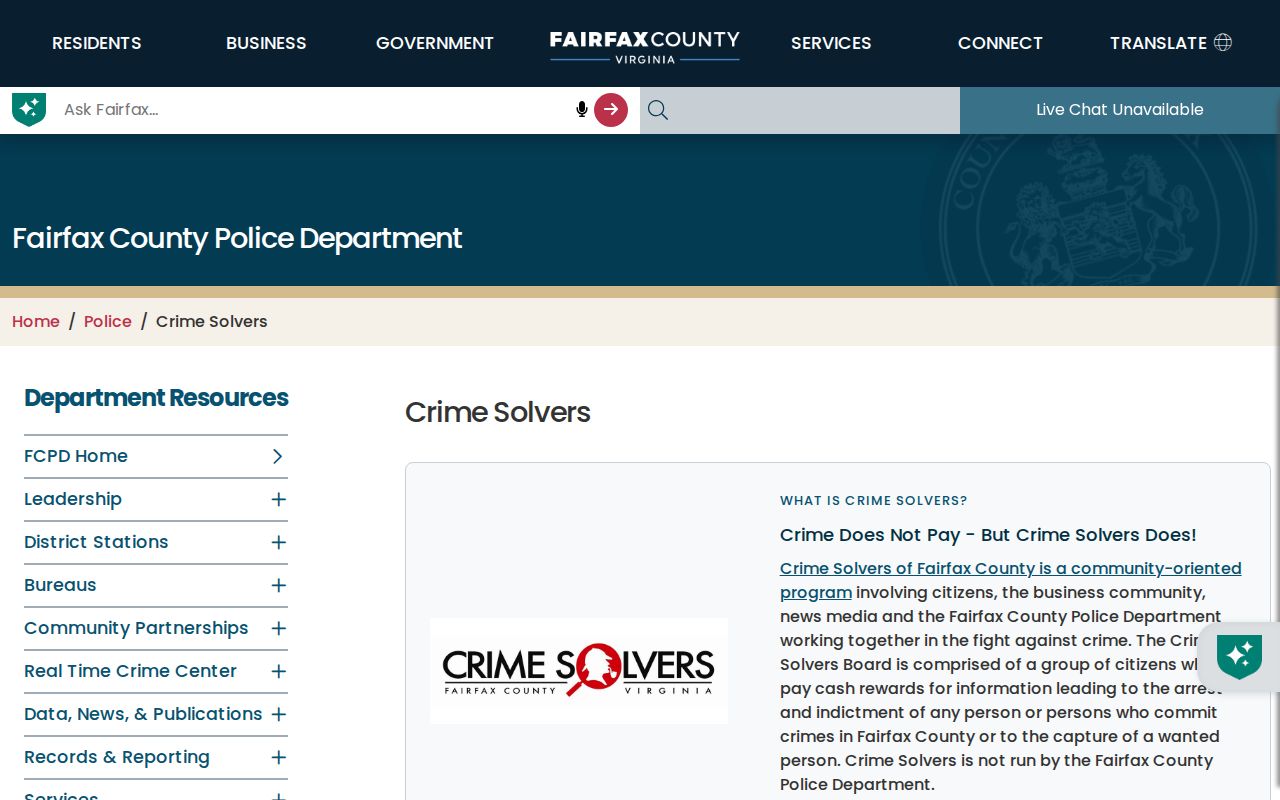
Crime Solvers of Fairfax County is the practical route for reporting information about a wanted person without calling 911. The program works with FCPD as a tip service, not a warrant-verification line. Tipsters can stay anonymous. The program says no name or phone number is required. Rewards run from $100 to $5,000 when qualifying tips lead to an arrest or indictment, a fugitive's capture, a case closing, or a recovery.
Crime Solvers of Fairfax County
Anonymous non-emergency tips: Fairfax County Crime Solvers
Phone: 1-866-411-TIPS (866-411-8477)
Online and app submissions go through P3 Tips. For an emergency or a crime in progress, dial 911.
The official Crime Solvers information page appears below. Use it to report something to police, never to track down or approach a person on your own.
Pick whichever submission method the program offers and send what you know. From there, investigators decide what's worth acting on.
Fairfax County Official Appeals
The police department's news page will occasionally post an appeal for help identifying a suspect. Those releases can be handy when you already know the incident. The catch is scope. One release covers one event on one date. There is no searchable countywide wanted roster behind it, no full warrant inventory, and no word on how a case ended up in court. The Sheriff's public site takes the same approach. It posts no standing wanted list either.
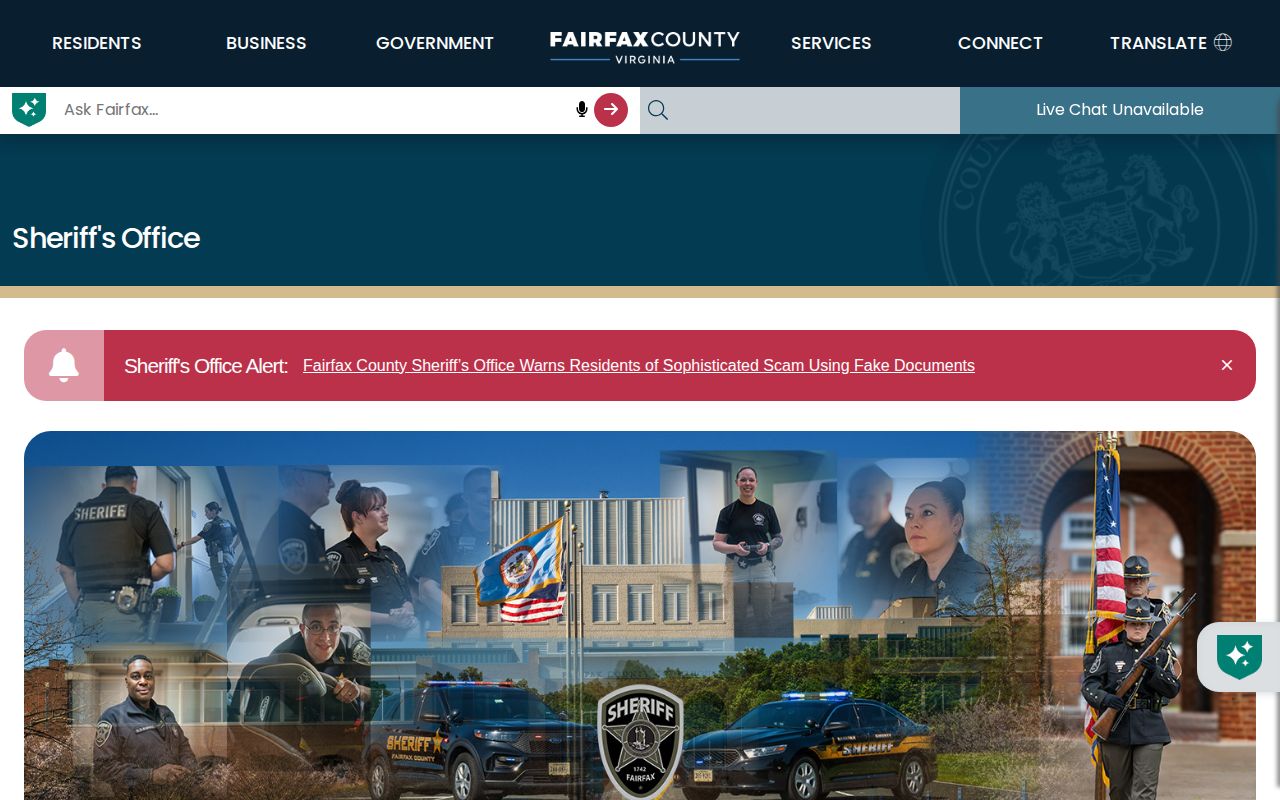
The Fairfax County Sheriff's Office overview shows the agency's official footprint, which is exactly why the no-list conclusion stands. An official site with no public wanted feature should never be padded out with third-party names, old photos, or claims nobody verifies.
If FCPD posts a named appeal, that release tells you whom to call. Follow its instructions directly, or pass a tip through Crime Solvers. Want to know how a case turned out later? Court records hold that answer, not the appeal itself.
Statewide and National Wanted Pages
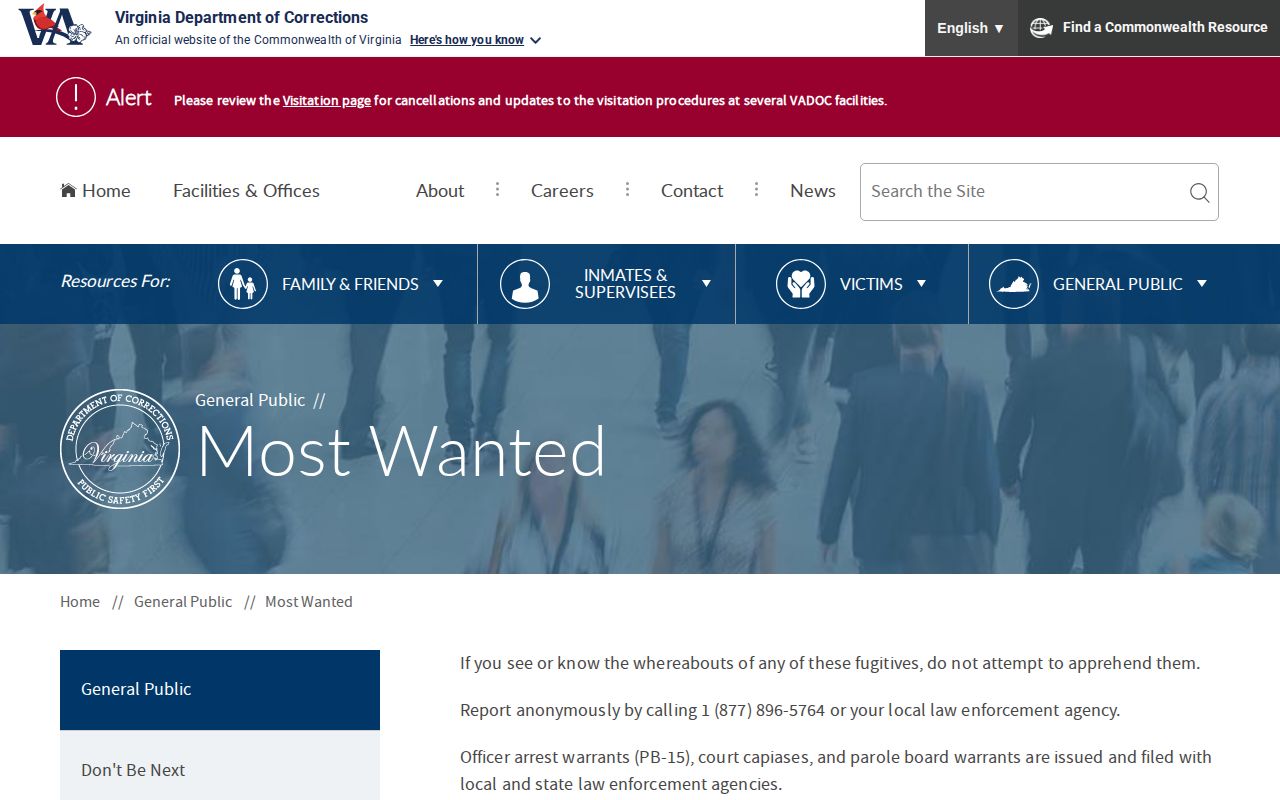
State and federal agencies do publish wanted information of their own. The VADOC Most Wanted page tracks escapees and fugitives across Virginia, sometimes with photos and physical details. VADOC also warns readers plainly: do not try to apprehend anyone. Keep in mind it is a corrections list, not an Adult Detention Center roster, and it cannot confirm a Fairfax County warrant.
The U.S. Marshals Service runs a national fugitive page too, asking the public to send tips to law enforcement. Neither page works as a general Fairfax warrant system. Each describes a different slice of the process, and confusing them leads people astray.
Match the page to the question at hand. A VADOC profile belongs to the Commonwealth's corrections system. A Marshals notice belongs to a federal fugitive investigation. Neither one substitutes for local confirmation from Fairfax itself, and treating a public photo as a fresh Fairfax booking record is a mistake waiting to happen.
The VADOC statewide Most Wanted page serves as a state-level option. Just keep the label straight: statewide, not a Fairfax County wanted roster.
For a Fairfax warrant question, go to the source. That means the Sheriff Warrant Desk, the proper court, or a lawyer. The court record is what shows what actually happened next.